LiFePO4 Prices Near Multi-Year Lows — Best Window Yet to Build a Home Battery
Grade-A 280Ah cells have dropped to $65–70 each — roughly 40% below 2022 peaks. We walk through a complete 20 kWh build: every component, every dollar, and the real economics of home battery storage in 2026.
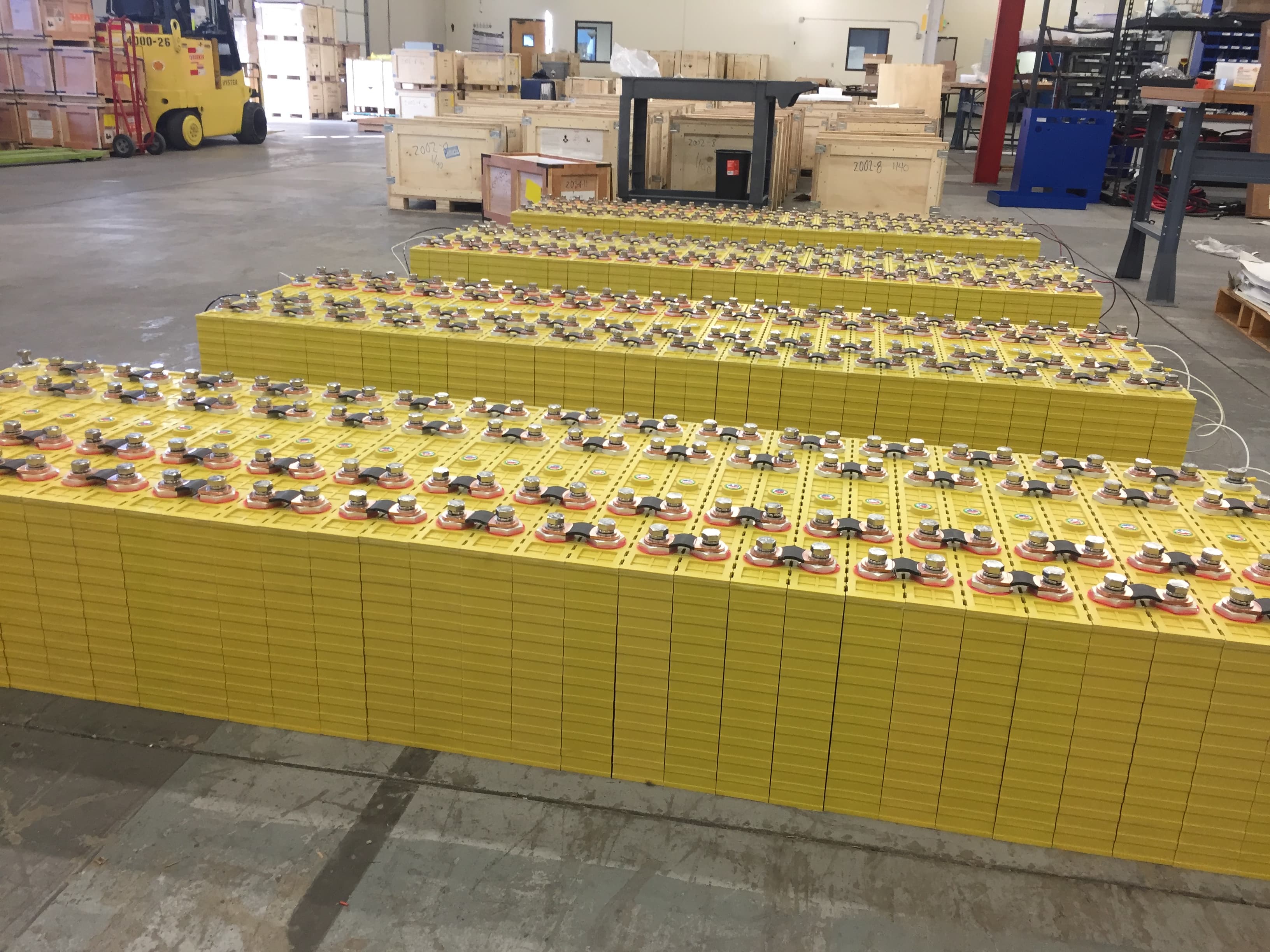
LiFePO4 280Ah prismatic cells — the workhorse of the DIY home battery community — are now trading at approximately $65–70 per cell from established US importers as of spring 2026, down from roughly $85 in early 2024 and $110–120 at 2022 peaks — a decline of nearly 40% over four years. GobelPower lists Grade A EVE LF280K cells at $66/cell with busbars and bolts; comparable cells from other vetted importers land in the same range. To put the current pricing in perspective: the cell cost alone for a 16-cell, 51.2V, 14.3 kWh battery pack is now approximately $1,056–1,120. That's less than a single Powerwall battery module cost four years ago — and the Powerwall needed an inverter, installation, and a Tesla account on top of it.
The price decline has structural causes that show no signs of reversing quickly. Chinese LFP manufacturing capacity grew at roughly twice the rate of global demand through 2023–2025; by mid-2025, installed capacity exceeded shipments by more than 35%, and the stationary storage segment was even more oversupplied — over 557 GWh of annual production capacity chasing less than 280 GWh of global installations. That kind of overcapacity means manufacturers are competing aggressively on price to move inventory and keep factories running. Lithium carbonate, the key upstream input, has compounded the effect: spot prices peaked at approximately $80/kg in late 2022 as EV demand surged, then collapsed as production expanded and EV growth moderated. Western market prices were under $12/kg by early 2026, and Chinese domestic prices are even lower. Cell manufacturers absorbing both input cost drops and competitive pressure have passed nearly all of it downstream. BloombergNEF reported average LFP cell prices approaching $74/kWh at the cell level globally in 2025.
The chemistry underlying LFP's dominance in the DIY space matters here. LFP — lithium iron phosphate, specifically the olivine crystal structure using iron and phosphate rather than cobalt or nickel — has a flat discharge curve, exceptional thermal stability (thermal runaway onset at 220–270°C versus 150–200°C for NMC), and extraordinary cycle life. Grade-A 280Ah cells from EVE (the LF280K) are rated for 6,000 cycles to 80% capacity at standard charge rates; REPT's Wending series cells are spec'd to 10,000 cycles. At one full cycle per day, that's 16–27 years of rated life — longer than most homeowners will stay in the same house. LFP's one real weakness is cold: cells lose approximately 40% usable capacity at −20°C, and should not be charged below 0°C without a heating element. For indoor or garage installations in temperate climates, this is a non-issue.
For a standard residential build, the 280Ah prismatic cell in a 16-series configuration has become the community default. Sixteen cells in series at 3.2V nominal gives 51.2V — close enough to 48V for all standard 48V inverters and chargers to work without modification. The nominal capacity is 280Ah × 51.2V = 14.34 kWh. For 20 kWh usable, running two strings in parallel (16S2P) at 90% depth of discharge on 280Ah cells gives approximately 25.8 kWh nameplate with roughly 23 kWh usable — or set the BMS to 78% DoD for a nominal 20 kWh usable target, which many builders prefer for longevity headroom. Community builds routinely use the 16S2P × 280Ah configuration and limit depth of discharge intentionally, treating the extra headroom as longevity insurance rather than wasted capacity.
EVE and REPT are the two brands that appear consistently across community build reports for 280Ah prismatic cells in the US market. CATL is the world's largest cell manufacturer, but its retail presence for DIY 280Ah cells is limited — most CATL cells available through importers are in smaller capacity formats intended for EV packs. For a home battery build, EVE LF280K and REPT Wending are the categories to source from. The community's vetted importers — names that appear repeatedly in the forum's supplier verification thread — ship in standard 8- or 16-cell configurations with capacity test data per cell, which is the minimum documentation you should accept. Spot-market purchases from unverified suppliers have produced defect rates of 10–15% in community reports; buying from documented suppliers drops that to under 1%.
The BMS is the second most consequential component choice. For a 16S or 16S2P LFP pack, the community consensus has converged strongly on the JK BMS 200A series. These units ($85–120 depending on variant and source) include: per-cell voltage monitoring, over- and under-voltage protection, over-temperature shutdown, short-circuit protection, a 2A active balancer, Bluetooth connectivity for real-time monitoring, and RS485/CAN output for inverter integration. You do not need a separate external active balancer — one JK BMS 200A does the full job. If cost is the absolute priority, a Daly Smart BMS with passive balancing runs $50–70 and works reliably for well-matched cells from a quality supplier.
A complete 20 kWh system breaks down as follows at current pricing. Cells: 32 × $67 = $2,144. JK BMS 200A: $110. Bus bars and cabling: $65. Steel enclosure or repurposed server rack: $180. 48V charger: $210. Miscellaneous hardware (fuse, breaker, terminals, heat shrink): $75. Total: approximately $2,784. Paired with a quality 48V inverter-charger (Victron Multiplus or equivalent), add $500–900.
Thermal management is the most overlooked aspect of a home battery build. LFP cells perform best between 15°C and 35°C. Charging below 0°C causes lithium plating on the anode, permanently degrading capacity. The solution is simple: foam insulation panels on the enclosure exterior ($15–25) and a $30–40 self-regulating heat cable inside the enclosure, wired to a thermostat. The heater draws 15–25W when active — negligible standby power. For attic or indoor closet installations in most of the US, no active thermal management is needed.
The economics depend heavily on your electricity rate structure. In states without time-of-use pricing, payback runs eight to twelve years. In states with meaningful TOU spreads ($0.15–0.25 difference between off-peak and peak rates), a household cycling 15–18 kWh daily can generate $800–1,200 per year in savings, putting payback at four to six years. California is the most favorable US market: SCE's TOU-D-4-9PM plan charges $0.58/kWh during the 4–9 PM peak versus $0.16/kWh off-peak — a $0.42 spread. At 15 kWh shifted daily, that's $2,295/year in avoided peak costs. Combine that with California's SGIP storage rebate and the math becomes compelling.
The federal Section 25D 30% residential clean energy credit for standalone battery storage was terminated by the OBBBA effective December 31, 2025. For 2026 installs, Section 25D is gone. Several states maintain independent storage incentives — California SGIP, New York, Massachusetts, and Colorado among them. There are also scenarios where building is the wrong call: if your utility does not offer TOU pricing and you're grid-connected, the financial case weakens substantially. If you rent, landlord approval is often an additional barrier. If you're not comfortable working with high-current DC systems, get proper training first or subcontract the DC wiring. The learning curve is real but not steep, and at current cell prices the build economics are the most favorable in this hobby's history.
Join the discussion
Share your thoughts, questions, and experience with the Photons & Electrons community.