

NEVI Formula Program: $5 Billion in Federal EV Charging Funds, State by State
NEVI has obligated funding for hundreds of fast-charging ports. Here's where deployment stands after a 2025 funding freeze and why rollout has been slow.
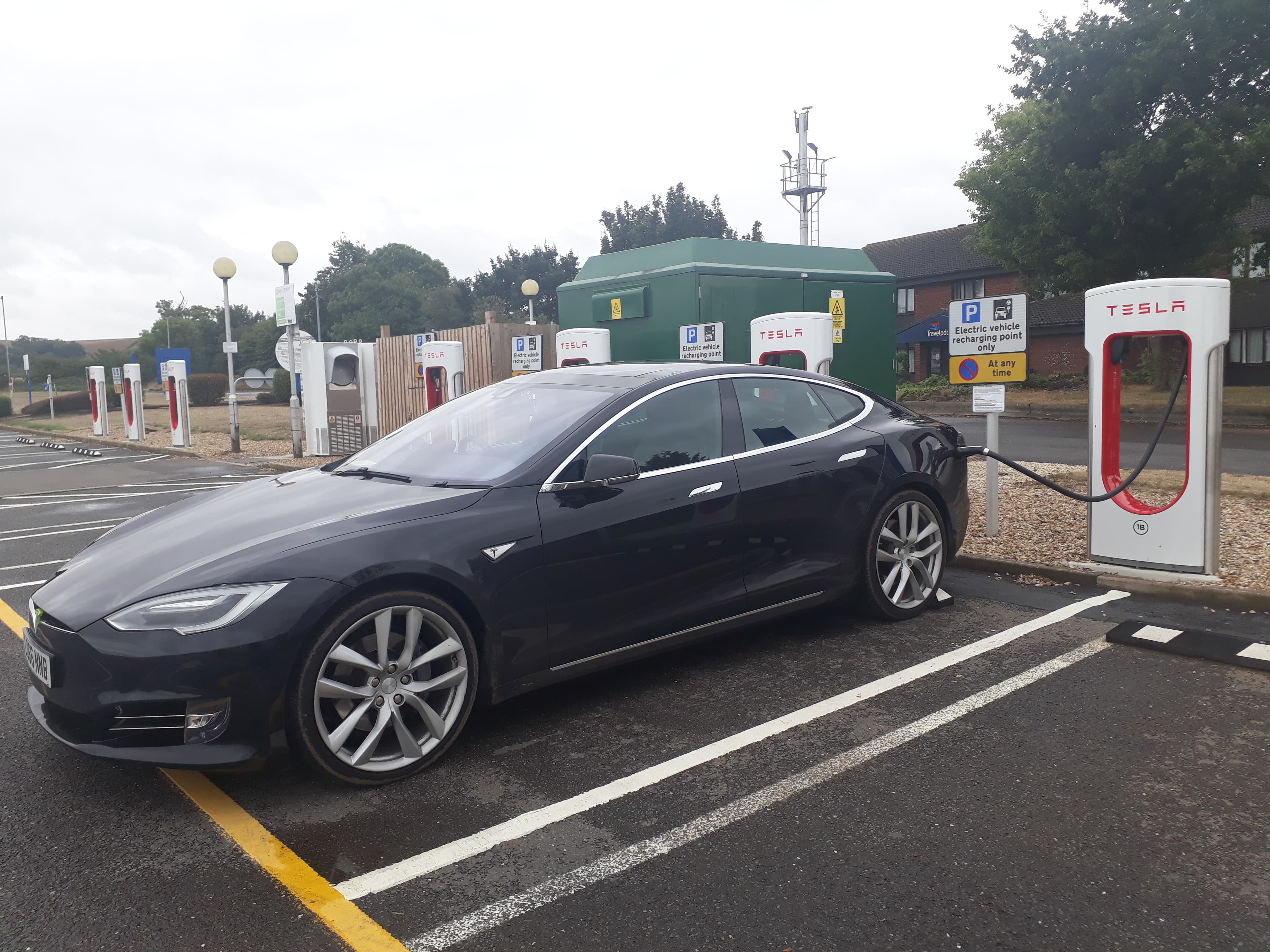
The National Electric Vehicle Infrastructure (NEVI) Formula Program is the largest single federal investment in EV charging infrastructure in US history — $5 billion allocated through the 2021 Infrastructure Investment and Jobs Act, distributed to all 50 states plus Washington DC, Puerto Rico, and US territories based on lane-miles of designated Alternative Fuel Corridors and EV registration growth. The program's original mandate was to build DC fast charging stations at intervals of no more than 50 miles along designated highway corridors, primarily the Interstate system. That 50-mile spacing requirement was made advisory — not mandatory — under revised FHWA guidance issued August 2025, giving states flexibility to redirect funds toward rural roads, secondary highways, and medium/heavy-duty charging hubs once primary corridors reach build-out.
Deployment: Slower Than Projected
State spending plans were FHWA-approved starting in mid-2022, but actual construction moved significantly more slowly than most projections. By Q4 2024, only 31 NEVI-funded stations with 126 ports were operational across 9 states. By mid-2025 that count had grown to approximately 57 stations and 384 ports across 15 states. The program hit a significant disruption on February 6, 2025, when the Trump administration froze NEVI fund obligations, halting new awards. Revised interim guidance issued August 11, 2025 allowed states to resubmit spending plans and access remaining FY22–26 funding, resuming development through 2025 and into 2026.
Three factors account for the gap between obligation and deployment:
- Utility interconnection: DCFC stations above 150 kW require utility infrastructure upgrades that take 12–24 months to engineer and permit in many jurisdictions, independent of the station's own permitting.
- State DOT procurement: States had to build procurement infrastructure, issue RFPs, and execute contracts with network operators — a process that took 12–18 months for most states.
- The 97% uptime standard: NEVI requires stations to maintain 97% annual uptime per port, which pushed operators toward more expensive hardware and prompted some to delay deployment until compliance monitoring systems were in place.
Technical Standards
NEVI requirements are materially more demanding than typical commercial DCFC installations. Every station must:
- Provide a minimum of 150 kW per port
- Support both CCS1 (SAE J1772 Combined Charging System) and NACS (SAE J3400) connectors
- Accept credit and debit card payments without requiring account creation or app downloads
- Be located within one mile of an interstate exit
- Maintain the 97% annual uptime threshold
The dual-connector requirement is particularly significant: stations installed exclusively with NACS or exclusively with CCS connectors do not qualify for NEVI funding regardless of other compliance.
State Performance
State performance varies considerably. Texas, Florida, and Colorado led on deployed ports through a combination of high funding allocations and streamlined DOT procurement processes. California and New York moved more slowly through their own regulatory and environmental review processes — CEQA review in California added procedural requirements absent in most other states. Alaska and Wyoming focused on the most isolated corridor segments, where NEVI-funded stations address genuine gaps in EV travel viability that no commercial market incentive would fill.
For EV drivers, the practical effect is most visible on major interstates. Significant portions of I-10, I-40, I-80, and I-90 now have NEVI-funded or NEVI-standard-compliant stations at compliant intervals, substantially closing the gap that existed in 2022. Secondary Alternative Fuel Corridors — US routes and state highways — lag behind, and the Mountain West remains the region with the greatest remaining coverage gaps. The Joint Office's interactive map at afdc.energy.gov/corridors tracks both AFC corridor designation status and NEVI-funded station locations in real time.
5 Replies
View in forum →Texas has NEVI funds allocated but deployment has been painfully slow. Drove Austin to Denver in April and the Wichita Falls to Amarillo stretch was genuinely sparse — I ended up doing a 90-minute hotel Level 2 charge. The NEVI map shows stations planned on that corridor but nothing is open yet. Happy to share the full trip report if anyone's planning the same route.
The dual-connector requirement — CCS and NACS both required on every NEVI-funded station — is the provision most people driving non-Tesla EVs care about most. A NEVI station that's NACS-only doesn't help me with my Ioniq 5. Good that it's a hard requirement, not a recommendation.
The 12–24 month utility interconnection timeline for stations above 150 kW explains most of the rollout delay. The permitting and procurement timelines for the stations themselves are manageable; it's the utility-side infrastructure upgrades that can't be compressed. This is a grid infrastructure problem as much as a DCFC deployment problem.
The Joint Office's interactive map at afdc.energy.gov/corridors is the actual planning tool to use for interstate routing. It shows both AFC corridor designation status and NEVI-funded station locations updated weekly. Way more current than Google Maps or PlugShare for understanding where NEVI stations specifically are versus general DCFC coverage.
The part of this program that actually matters to me isn't the interstate corridor stations everyone in this thread is discussing — it's whether any NEVI money ever lands on urban curbside or destination charging, because that's the gap that affects my daily charging, not my road trips. I don't have a garage. I have a parking spot on a residential street and a public DCFC I drive to twice a week like it's a gas station, because it functionally is one for me. Corridor buildout is great if you're driving Austin to Denver. It does nothing for the daily-urban-no-driveway problem, which is a much bigger share of EV owners than infrastructure planning seems to assume. Would love to see a state-by-state breakdown of how much NEVI funding specifically targets urban/multi-unit charging versus highway corridors, because I'd bet the number is smaller than most people reading this thread would guess.