

FMVSS 305a Explained: The Next Era of EV Battery Safety
FMVSS No. 305a, effective February 2025, rewrites the federal framework for EV battery safety — covering thermal runaway venting, crash isolation, and the new 49 CFR Part 561 emergency documentation requirement. Here's what each provision does and what it means for the conversion community.
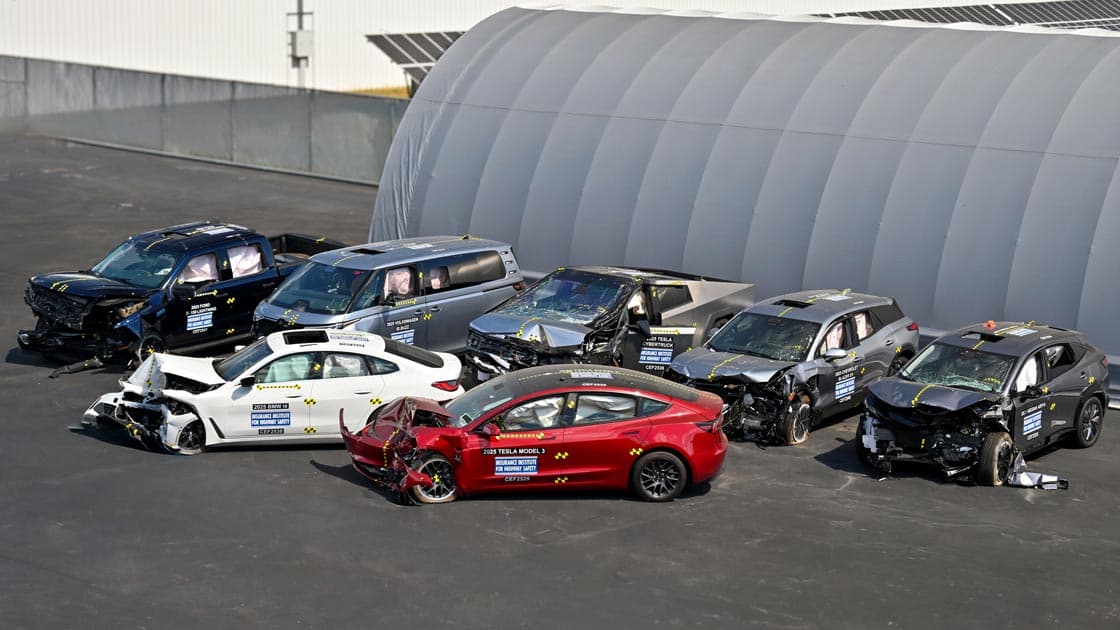
Electric vehicles have evolved rapidly, pushing regulators to rethink safety standards written before today's battery systems existed. Battery packs have grown larger, charging speeds have increased, and modern EVs now contain high-voltage systems capable of storing and delivering far more energy than the vehicles covered by the original electric vehicle safety regulations.
The response from regulators is a major update to the federal safety framework: Federal Motor Vehicle Safety Standard (FMVSS) No. 305a, Electric-Powered Vehicles: Electric Powertrain Integrity. The rule replaces the older FMVSS 305 requirements and brings US EV safety requirements closer to the battery integrity and post-crash safety approaches used in international standards.
NHTSA finalized the rule in December 2024, and it took effect February 18, 2025 — though automakers have a multi-year runway before full compliance is required. For drivers, the changes may not be immediately visible. There is no new dashboard warning light or charging requirement. Instead, FMVSS 305a changes how automakers design, test, document, and protect the high-voltage systems underneath the vehicle.
From Electrical Shock Protection to Complete Battery Safety
When FMVSS 305 was introduced, EV adoption was still limited and battery packs were significantly smaller. Early rules focused primarily on preventing electrical shock and electrolyte leakage after a crash — a reasonable scope for the EVs of that era.
Today's EVs are fundamentally different. A modern electric vehicle can contain a battery pack exceeding 100 kWh, operate at high charging rates, and place a large energy storage system underneath the passenger compartment. A damaged lithium-ion battery can create risks beyond simple electrical exposure: a severe crash can lead to internal battery damage, thermal runaway, fire, or the release of hazardous gases.
The regulatory challenge shifted from simply preventing contact with high voltage to managing an entire vehicle-sized energy storage system after a collision. FMVSS 305a reflects that shift, expanding the focus from "prevent electrical contact" to a broader goal: maintaining the integrity of the entire electric powertrain.
The updated standard applies to vehicles using high-voltage electric propulsion systems, including battery electric vehicles and plug-in hybrids. It also broadens FMVSS 305's reach for the first time to heavy-duty vehicles — including trucks, vans, and buses with a gross vehicle weight rating (GVWR) above 10,000 pounds — and addresses safety during normal operation, charging, and after collisions.
What Changes Under FMVSS 305a
Battery pack protection becomes a bigger priority. Manufacturers must demonstrate that the battery enclosure can withstand defined crash-related forces while protecting occupants from electrical hazards and battery intrusion. The battery pack is no longer treated as simply another component — it is effectively a structural safety system. This pushes automakers toward stronger battery enclosures, improved crash isolation, and tighter integration between the pack and vehicle structure. For EV builders and enthusiasts, this trend has implications beyond OEM vehicles: as battery packs become more integrated into vehicle structures, sourcing intact salvage packs and adapting them safely may become a more complex engineering challenge.
Thermal runaway mitigation. Battery fires have become one of the most discussed EV safety concerns, even though they remain relatively uncommon compared with total vehicle fires. FMVSS 305a addresses the risk by requiring manufacturers to demonstrate that battery failures do not create unacceptable hazards — including fire, explosion, or the venting of hazardous gases into the passenger compartment. The goal is not to guarantee a battery can never fail, but to ensure failures are contained and managed.
High-voltage isolation after a crash. After a collision, one of the most immediate dangers is that a damaged high-voltage system could expose occupants, rescue workers, or bystanders to dangerous electrical energy. The updated standard strengthens requirements around high-voltage isolation, automatic disconnect systems, and protection from exposed electrical components. Modern EVs already use many of these technologies, including crash-triggered battery disconnects and high-voltage interlock loops; FMVSS 305a makes those safety strategies part of the regulatory baseline.
Better information for first responders. A major companion change is improved emergency response documentation. NHTSA paired the rule with a new regulation, 49 CFR Part 561, requiring manufacturers to compile risk mitigation documentation and submit standardized emergency response information. EVs are fundamentally different from gasoline vehicles after a crash — firefighters and emergency crews need to know where the battery is located, how the high-voltage system is arranged, and what hazards may exist. A vehicle that is safer to manufacture is only part of the equation.
FMVSS 305a Compliance Timeline
FMVSS 305a is already an active regulation, but implementation happens gradually:
- December 22, 2025: Emergency response documentation requirements begin.
- September 1, 2027: Full compliance required for light-duty vehicles (≤ 10,000 lbs GVWR).
- September 1, 2028: Full compliance required for heavy-duty vehicles (>10,000 lbs GVWR).
Note: Small-volume manufacturers, final-stage manufacturers, and alterers receive an additional one-year extension.
In practice, FMVSS 305a is settled law, but its effects on vehicles reaching dealer lots will appear gradually over the next several years.
What Does This Mean for EV Owners
For consumers, FMVSS 305a should mostly be invisible — and that is the point. The regulation does not require drivers to change how they charge, maintain, or operate their vehicles. Instead, it raises the engineering requirements behind every new EV sold in the United States. Future vehicles may benefit from stronger battery protection structures, improved crash response systems, better high-voltage isolation, and more standardized emergency documentation. The impact will show up indirectly, in vehicle design choices rather than dealer-lot features.
The Challenge for EV Conversions
While OEM-built EVs move toward stricter battery safety requirements, converted electric vehicles remain a more complicated area. A factory EV is designed around a battery pack from the beginning. A conversion often places a modern high-voltage battery system into a vehicle platform originally designed around an internal combustion engine.
FMVSS 305a primarily targets vehicle manufacturers, but professional shops that meet the regulatory definition of an "alterer" are covered by the rule — they simply receive additional time before compliance requirements apply. The narrower open question is around individual hobbyists and small builders whose vehicles may never be classified as manufactured or altered, leaving them without a clearly defined compliance path.
The rise of standardized conversion kits and specialty EV platforms may eventually force regulators to clarify where professional modification ends and vehicle manufacturing begins.
A Necessary Evolution for Electric Vehicles
FMVSS 305a represents a meaningful shift in how regulators view EV safety. The question is no longer whether electric vehicles need special rules — they clearly do. The question is how those rules evolve alongside rapidly changing battery technology.
For OEM vehicles, the rule provides exactly the clarity the industry needed: defined test protocols, compliance deadlines, and standardized emergency response requirements that give first responders the same information for every new EV at the roadside. That part is settled.
The open question is what happens in the space the rule doesn't cover. Professional alterers have a compliance runway. Individual builders have no regulatory framework at all, and the growth of the conversion sector — particularly higher-voltage builds using salvage packs from increasingly sophisticated OEM vehicles — suggests that gap will become harder to ignore. Whether NHTSA eventually extends a simplified compliance pathway to conversion vehicles, or the industry self-organizes around voluntary equivalence standards, is the question the next generation of EV safety rulemaking will have to answer.