

Rivian Reliability: Growing Pains Persist as the Brand Matures
As of mid-2026, Rivian builds compelling vehicles — but Consumer Reports still rates both the R1T and R1S below average for reliability. A federal suspension investigation, 17 combined recalls on 2025 models, and a thin service network mean the company has not yet made the transition from promising startup to mature automaker.
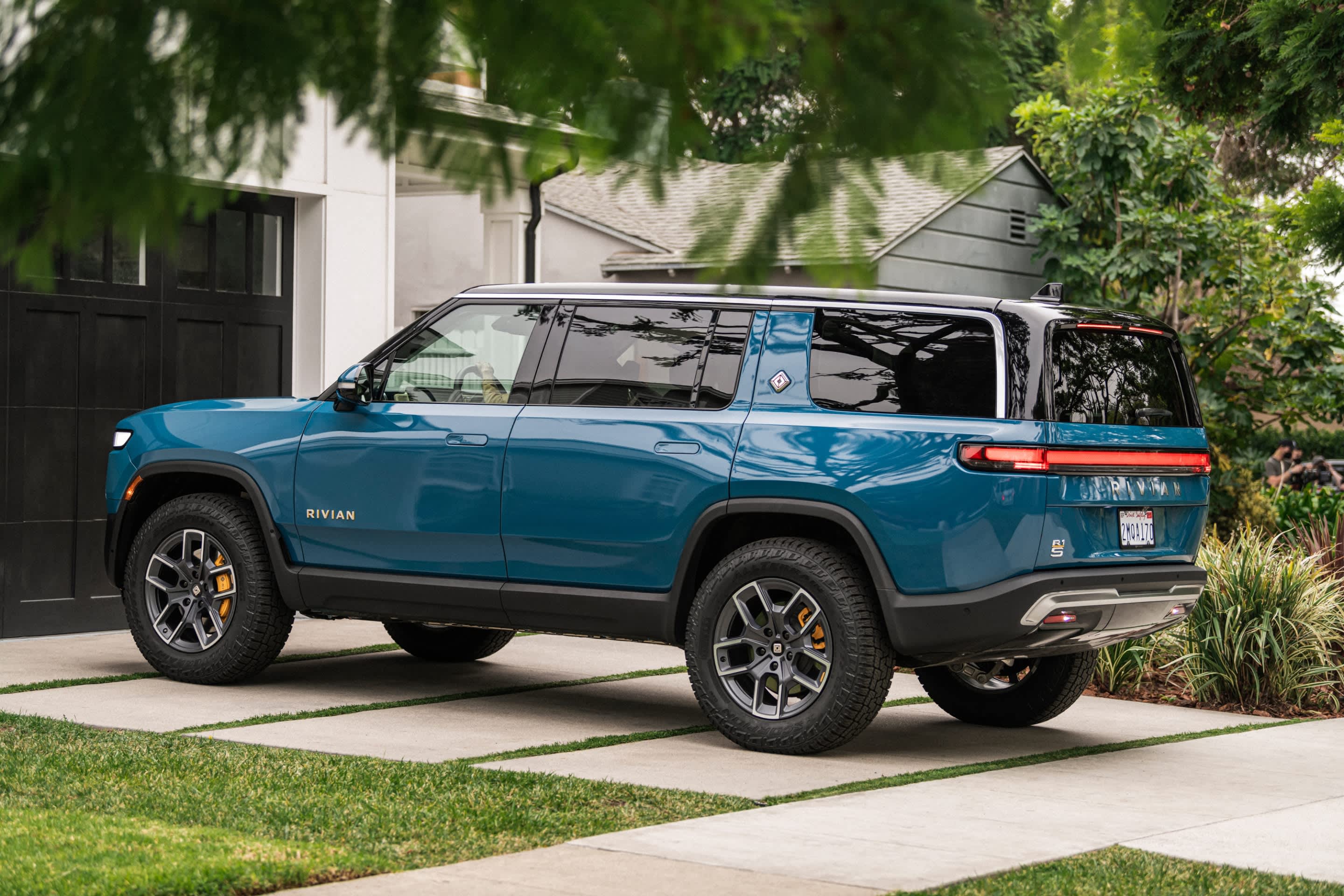
Few electric vehicle startups have generated as much enthusiasm as Rivian. The company's R1T pickup and R1S SUV have earned praise for their performance, off-road capability, software experience, and distinctive design. Yet alongside those strengths, Rivian continues to face reliability challenges that place it behind many established automakers.
As of mid-2026, the question is no longer whether Rivian builds compelling vehicles—it clearly does. The question is whether the company has solved the quality and reliability issues that have followed it since launch.
The answer is mixed.
Reliability Ratings Remain Below Average
Independent reliability data continues to paint a cautious picture. Consumer Reports currently rates both the R1T and R1S below average for predicted reliability, citing owner-reported issues in its annual automotive reliability surveys across multiple categories. The publication's findings suggest Rivian vehicles experience more problems than many competitors, particularly in areas involving electronics, software, suspension components, and vehicle hardware.
That does not necessarily mean Rivians suffer from catastrophic failures. Many owners report excellent experiences with the battery pack, motors, and core drivetrain systems. The majority of complaints instead involve complex electronic systems, fit-and-finish concerns, suspension components, and software-related bugs.
This distinction matters. Reliability problems involving sensors, trim components, or software updates can be frustrating, but they differ significantly from widespread failures of batteries or electric drivetrains. So far, Rivian's most expensive components appear to be holding up reasonably well.
Recalls and Gen 2 Teething Issues
One of the clearest indicators of Rivian's ongoing quality challenges is the number of recalls affecting its vehicles.
The 2025 R1S accumulated nine recalls, while the 2025 R1T accumulated eight. Many were addressed through over-the-air software updates, but others required service-center visits. Recent recalls have included driver-assistance software defects, a high-voltage distribution box grounding issue that could result in a loss of drive power, and improperly tightened seat belt retractor bolts on certain vehicles.
This recall activity overlaps with one of the most significant engineering changes in Rivian's history: the launch of the Generation 2 platform for the 2025 model year.
To improve manufacturing efficiency and reduce production costs, Rivian substantially redesigned the vehicle's electrical architecture. The company eliminated several miles of wiring and consolidated electronic control systems, reducing the number of major control units from 17 to seven.
The long-term benefits could be substantial. Fewer components generally mean lower manufacturing costs, simpler assembly, and fewer potential failure points. However, redesigning a vehicle's electrical backbone is rarely seamless. Early Gen 2 vehicles appear to have experienced the typical software and supplier-related issues that often accompany major platform transitions, reinforcing concerns that Rivian is still refining its quality-control processes as it scales.
Suspension Concerns Draw Federal Attention
Perhaps the most serious development involves Rivian's rear suspension system, which has drawn federal scrutiny and could become one of the company's most significant reliability tests to date.
On May 26, 2026, the National Highway Traffic Safety Administration (NHTSA) opened Preliminary Evaluation PE26004 covering 114,922 Rivian R1T and R1S vehicles from the 2022–2025 model years. The investigation was triggered by reports of left-rear toe-link separations while driving—a failure that can allow the affected wheel to pivot unexpectedly, potentially causing a sudden loss of vehicle control.
According to NHTSA documents, two complaints involved rear toe-link bolt fractures that caused lane departures while driving. One incident resulted in a collision with another vehicle and a roadside barrier. Regulators are now evaluating whether the issue stems solely from service-related errors or could indicate a broader durability concern within the suspension system.
The Timeline Behind the Investigation
The issue first emerged as a service-related concern.
In March 2025, Rivian identified that some service technicians had been using an outdated rear suspension procedure that could result in toe-link bolts being improperly tightened following repairs. The company subsequently updated its service instructions.
On January 5, 2026, Rivian filed NHTSA Recall 26V-003 covering 19,641 vehicles—12,610 R1T pickups and 7,031 R1S SUVs. The recall applied to vehicles that had undergone rear suspension service before March 10, 2025, and called for replacement of the affected rear toe-link bolts using the updated procedure.
The issue escalated several months later when NHTSA opened Preliminary Evaluation PE26004. Investigators noted that one reported toe-link separation involved a vehicle that had never undergone the repair procedure addressed by Recall 26V-003, raising questions about whether the failures could extend beyond service-related errors.
Rivian has maintained that its internal data indicates the suspension system is operating as intended and that the reported incidents may be linked to isolated service history or external damage rather than a fundamental design defect. The outcome of the investigation could become an important indicator of the company's long-term engineering maturity.
The Power Tonneau Cover: A Recurring Symbol of Hardware Struggles
The powered bed cover on the R1T became one of Rivian's most visible quality issues after widespread owner reports of failures, jamming mechanisms, and broken components.
The problem became significant enough that Rivian eventually halted installations and redesigned the system. Although the updated version appears more robust, owner forums continue to document intermittent failures and occasional service visits related to the accessory.
The tonneau cover is not safety-critical, but it has become symbolic of Rivian's broader struggle to ship complex hardware systems that consistently perform as intended once vehicles reach customers.
Service Network Limitations Amplify Reliability Concerns
A recurring theme among Rivian owners is that the inconvenience of a problem is often magnified by service-center availability.
Unlike Ford, General Motors, or Toyota, Rivian operates a comparatively small service network. Owners who live far from service centers can face lengthy appointment wait times, mobile-service limitations, and significant travel for repairs.
This creates an important distinction. Some Rivian issues may be relatively minor, but resolving them can take significantly longer than with a traditional automaker supported by thousands of dealership service locations.
For many owners, the service experience—not necessarily the frequency of problems—has become one of the most significant frustrations of ownership.
A Look Back at Tesla's Early Years
For those who followed Tesla's rise during the 2010s, Rivian's current challenges may feel familiar.
Today, Rivian is often compared against Toyota, Ford, or General Motors. A more useful comparison may be Tesla during its first decade of volume production, when the company was simultaneously scaling manufacturing, building a service network, developing software platforms, and refining vehicle quality.
Early Model S owner complaints—touchscreen failures, suspension problems, malfunctioning door handles, trim defects, and software glitches—read strikingly similar to today's Rivian forum discussions.
During the Model 3 production ramp, Tesla faced additional criticism for panel gaps, paint quality, assembly inconsistencies, and manufacturing defects as the company worked through what Elon Musk famously described as "production hell."
Consumer Reports' reliability surveys frequently rated early Model S model years below average despite exceptionally high owner satisfaction scores. The contrast became one of the defining characteristics of Tesla ownership during its growth years: owners often loved the vehicles while simultaneously reporting more problems than drivers of established luxury brands. Rivian appears to be experiencing a similar dynamic today.
Suspension-related federal scrutiny also has historical precedent. Regulators spent years reviewing reported suspension failures on older Tesla Model S and Model X vehicles. The comparison is not perfect, but the parallels between Tesla's first decade and Rivian's current situation are difficult to ignore.
The Difference Between a Startup and a Mature Automaker
Tesla's history offers an important lesson.
Early reliability struggles did not prevent the company from becoming a major automotive manufacturer. Over time, many of the serious drive-unit and hardware problems that affected its earliest vehicles were engineered out through redesigns, supplier improvements, software updates, and manufacturing refinements.
Tesla gradually evolved from a company known for frequent hardware issues into one whose primary complaints increasingly centered on software behavior, fit-and-finish concerns, and customer-service experiences.
That trajectory offers both encouragement and caution for Rivian. The encouraging news is that young EV manufacturers can improve substantially as production volumes rise, suppliers mature, and engineering teams gain real-world experience. The cautionary lesson is that the process takes years—not months—and requires multiple redesigns, recalls, and continuous refinement.
What Rivian Gets Right
Despite the reliability concerns, owner satisfaction remains surprisingly strong.
The R1T and R1S consistently earn praise for driving dynamics, off-road capability, charging performance, software features, and overall versatility. Many owners report that the vehicles' strengths outweigh the frustrations associated with occasional service visits or software glitches.
More importantly, Rivian's battery packs, motors, and fundamental EV architecture have largely avoided the widespread catastrophic failures that have plagued some automotive startups.
That does not excuse quality-control issues, but it suggests Rivian's reliability challenges are concentrated in areas that may be more amenable to engineering and manufacturing improvements over time.
Outlook: Improving, But Not Yet Best-in-Class
Rivian has largely proven it can build desirable electric vehicles. What remains unproven is whether it can build them consistently, with the reliability expected of a mature automaker.
Many of the company's challenges involve software systems, manufacturing quality, and service operations—areas that can improve significantly as production volumes grow and engineering teams gain experience. Hardware concerns, federal investigations, recurring recalls, and service-network limitations, however, indicate there is still considerable work ahead.
For buyers considering an R1T or R1S, these remain among the most capable electric trucks and SUVs on the market. Prospective owners should approach the purchase with realistic expectations: Rivian offers cutting-edge technology, impressive capability, and a distinctive ownership experience, but it has not yet achieved the reliability standards associated with industry leaders such as Toyota, Lexus, or Honda.
The vehicles themselves have already won over many buyers. What Rivian must prove now is that it can build them with the consistency and durability expected of a mature automaker. Tesla eventually made that transition. Rivian's next few years will reveal whether it can do the same.
2 Replies
View in forum →Year two on an R1T. Hardware build quality has genuinely improved from the early batches — anyone who touched a 2022 delivery can feel the difference. The weak point is software. Two of the last four OTAs introduced something that needed a follow-up patch. The truck is excellent. The software release process is still a startup's, not a truck company's.
The right-to-repair situation with Rivian is what I track closely from a shop perspective. Scan tool access is better than most OEMs at this stage, which is a real point in their favor. The structural battery pack design is still a problem — moderate collision damage that touches the pack is close to a total loss in most scenarios I've seen come through. Good truck. Shop-unfriendly architecture.