

Fast Charging's Next Phase: Why Reliability Matters More Than Range
The US crossed 74,000 public DC fast-charging ports in 2026. Coverage is no longer the defining problem. Reliability is — and the industry is optimizing for the wrong metric.
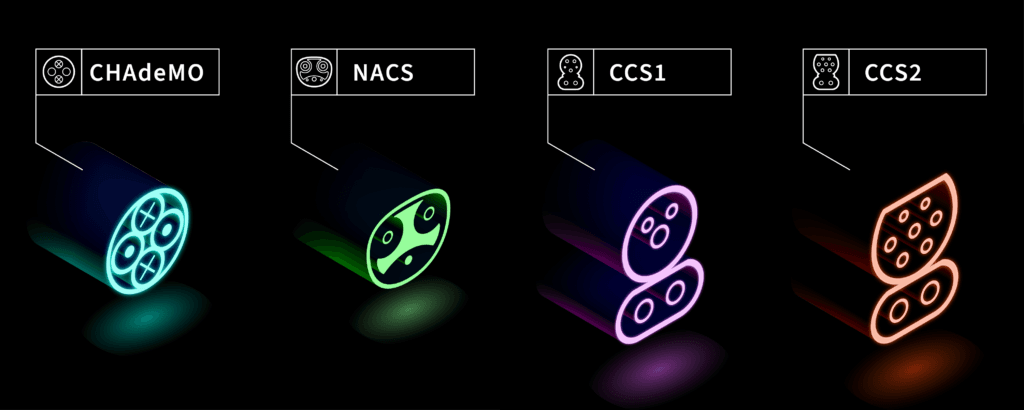
The United States passed 74,000 public DC fast-charging ports in 2026. Roughly 18,000 of those came online in 2025 alone — the fastest single-year expansion in the network's history, according to Electrek. Along the major interstate corridors and in most metropolitan areas, the question that defined the first decade of EV adoption — can America build enough chargers? — has a workable answer. The question the industry now faces is different, and harder.
NACS Consolidation Is Real. The Transition Will Take Years.
The North American Charging Standard (NACS), developed by Tesla and standardized as SAE J3400 in 2023, has consolidated the connector market faster than most observers predicted. Ford and GM moved first in mid-2023. Rivian, Honda, Volkswagen, and Nissan followed. Stellantis — the last significant holdout among major automakers — committed in November 2025. Every new EV entering the US market for 2026 and beyond ships with a native NACS port or provides an adapter.
The practical effect: new EV owners have default access to Tesla's Supercharger network — 37,400-plus stalls, the largest and most reliable fast-charging network in the country. That represents a meaningful shift in the ownership experience for every non-Tesla buyer who previously had to plan around CCS-only infrastructure.
What the NACS story often omits: the installed fleet transitions slowly. A substantial share of EVs on US roads today carry CCS1 ports and will remain in service through the early 2030s. Tesla's CCS-to-NACS adapter addresses this, but adds friction. The full benefit of standardization — a genuinely unified charging experience regardless of vehicle vintage — arrives gradually, over several model years.
Reliability Is the Number the Industry Avoids Disclosing
Tesla's 2024 Impact Report cited 99.95% uptime across the Supercharger network. No other major charging network has published an equivalent figure, which is itself informative. Independent surveys of non-Tesla DCFC networks throughout 2024 and 2025 consistently found 15–25% of sampled ports out of service at any given time. Some regional operators have improved materially. The industry-wide average has not.
This matters in a way port-count statistics don't capture. A driver who arrives at a broken charger on a highway trip doesn't simply experience inconvenience — they adjust future route planning, evaluate vehicle purchases based on network access rather than specs, and communicate the experience to other drivers. The charging anxiety EV adoption rates depend on reducing is substantially a reliability problem, not a coverage problem. The industry's primary metric — port counts — is largely the wrong one.
Hubs Are Replacing Isolated Installations
The format of fast-charging deployment is changing. Early charging infrastructure typically installed two to four chargers in the corner of a parking lot — sufficient to establish geographic coverage, insufficient to handle peak demand. The pattern in 2025 and 2026 is larger hubs: eight, twelve, twenty or more stalls designed around a 15–30 minute dwell time rather than a five-minute fuel stop.
Travel centers, highway rest plazas, and dedicated charging destinations are the preferred format. Tesla's largest Supercharger sites, Pilot and Flying J travel centers, and IONNA's Rechargery locations represent this shift. IONNA — a joint venture backed by BMW, Mercedes-Benz, General Motors, Stellantis, Hyundai, Honda, Kia, and Toyota — is the most significant new entrant in this format. Its involvement signals that legacy automakers have concluded they cannot leave charging infrastructure to independent operators and expect it to work reliably at scale.
The average stall count per US fast-charging site has increased year over year since 2023. The trend reflects a shift in operator incentives: a ten-stall hub with consistent uptime generates more revenue and better driver outcomes than four smaller isolated sites with average reliability.
Tesla Leads, but Its Share Is Narrowing
Tesla operated approximately 37,400 Supercharger stalls in the US as of mid-2026, representing roughly 52% of all domestic DC fast-charging ports — down from around 60% two years prior, according to evchargingstations.com tracking data. EVgo, Electrify America, IONNA, Walmart, and Rivian's Adventure Network are all expanding. The competitive market for charging infrastructure is more real today than at any point in the industry's history.
What has not changed: Tesla sets the operational benchmark. No other network has publicly demonstrated the combination of network scale, uptime, and user experience that the Supercharger delivers. Opening to non-Tesla vehicles in 2023 was strategically sound — it creates a recurring revenue stream independent of vehicle sales and makes NACS adoption more valuable industry-wide. Whether that operational lead holds as IONNA and EVgo scale is the defining competitive question for the decade.
800V and Charging Curves Matter More Than Peak Power
The industry conversation about charging technology disproportionately focuses on peak power figures. The driver experience is determined by something different: how consistently a vehicle can accept power across a full session.
An 800-volt vehicle with good thermal management that sustains 200–250 kW from 10% to 80% state of charge typically delivers a shorter stop than a 400-volt vehicle that briefly touches 350 kW before thermal limiting forces the rate down. The Hyundai Ioniq 5 and 6, Kia EV6, and Porsche Taycan demonstrated this: their real-world session times at 150 kW stations frequently beat competitors at 350 kW stations because their charging curves are flatter. Megawatt charging is relevant for Class 8 commercial trucking. For passenger vehicles, 150–350 kW with a flat curve is the specification that determines actual stop time.
The Business Model Is Still Unproven at Scale
For most of the past decade, fast-charging deployment was underwritten by government grants, automaker capital, and investor funding that treated site profitability as secondary to coverage. That worked for building the network. It does not work indefinitely.
The economics are improving as EV penetration rises and utilization rates per charger increase. NACS standardization expands the addressable user base at any station. Larger hub formats spread fixed infrastructure costs across more stalls. The transition from subsidized deployment to self-sustaining charging businesses is underway — but most non-Tesla operators have not yet demonstrated the model works without ongoing capital infusions. The operators who solve reliability and economics simultaneously will define the industry's next phase.
The Metric That Actually Matters
Port counts were the right metric when coverage was the problem. Uptime, session success rates, and actual delivered power are the right metrics now. The networks that report and optimize for these — rather than announcing deployment milestones — are the ones building durable competitive positions.
The next five years will be defined by continued NACS consolidation as the installed fleet turns over, larger destination-oriented charging hubs that treat a stop as a planned amenity, and industry-wide pressure to disclose reliability data that customers can actually use. The charger in front of a driver either works or it doesn't. Everything else in the buildout ultimately comes down to that.